

If you’ve ever thought “I can’t meditate” or “my mind is too busy,” this evidence-based guide will change your perspective. Recent neuroscience research shows that just 10 minutes of daily meditation can reduce anxiety by up to 60%, improve focus by 14%, and even increase gray matter in the brain.
Let’s explore exactly how to build a transformative meditation practice—starting today.
Why Meditation Works: The Neuroscience
fMRI brain scans reveal that meditation literally rewires your brain:
- Prefrontal cortex (decision-making, focus) becomes thicker
- Amygdala (fear, stress response) becomes smaller
- Hippocampus (memory, learning) grows denser
- Default mode network (mind-wandering) becomes less active
The result? You become calmer, more focused, and more emotionally resilient.
8 Beginner-Friendly Meditation Techniques
1. Breath Awareness Meditation
How to practice:
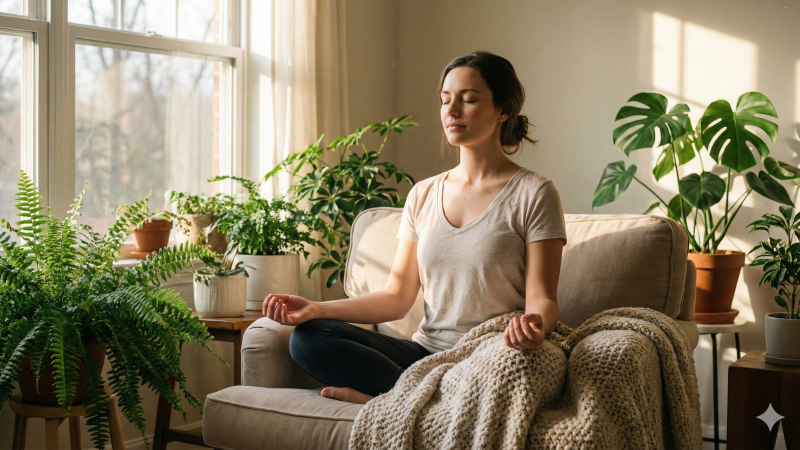
- Sit comfortably with your spine straight
- Close your eyes gently
- Notice the natural rhythm of your breath
- When your mind wanders (it will!), gently return to your breath
- Continue for 5-10 minutes
Perfect for: Absolute beginners, stress relief, building concentration
2. Body Scan Meditation
A systematic practice that releases physical tension and increases body awareness.
Steps:
- Lie down comfortably
- Bring attention to your toes
- Slowly move awareness up through your entire body
- Notice sensations without judging them
- Take 15-20 minutes
Benefits: Reduces chronic pain, improves sleep, releases muscle tension
3. Loving-Kindness Meditation (Metta)
Cultivate compassion for yourself and others.
Practice:
- Sit quietly and bring to mind someone you love
- Silently repeat: “May you be happy, may you be healthy, may you be safe, may you live with ease”
- Extend these wishes to yourself, neutral people, difficult people, and all beings
Research shows: Increases positive emotions, reduces social anxiety, enhances empathy
Building Your Meditation Practice
Week 1: 5 minutes daily
Week 2: 7 minutes daily
Week 3: 10 minutes daily
Week 4+: 15-20 minutes daily
Best times to meditate:
- Morning (sets positive tone for the day)
- Lunch break (resets focus)
- Evening (processes the day’s stress)
Common Beginner Questions
Q: Is it normal for my mind to wander constantly?
A: Absolutely! The practice isn’t about stopping thoughts—it’s about noticing when you’re thinking and gently returning to your focus point. This is the practice.
Q: How long before I see results?
A: Most people notice improved sleep and reduced stress within 1-2 weeks. Brain changes are measurable after 8 weeks of consistent practice.
Q: Do I need to sit cross-legged?
A: No! Sit in a chair, lie down, or use a meditation bench. Comfort matters more than position.
Conclusion: Start Now
You don’t need to be “good at meditation” to begin. You just need to show up consistently.
Set a timer for 5 minutes right now. Sit comfortably. Close your eyes. Notice your breath.
That’s it. You’ve started meditating. Everything else is just practice.
Leave a Reply